
Why porn is so hard to quit: the itch it creates
Porn doesn't so much give you pleasure as end a restlessness it created. Seeing that backwards loop is what makes stopping easier.
By the rerute team3 min readUpdated
the short answer
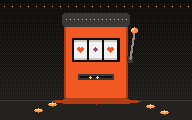
Porn is hard to quit because it's built for the brain's wanting system: endless novelty on demand, which keeps dopamine flowing like nothing humans evolved with. Afterwards comes a faint, restless dip, and the next session relieves it, so the relief gets mistaken for pleasure. Over time the reward system turns its own volume down, ordinary pleasures feel flatter and stronger content is needed. The good news: the itch is mild, and it fades when it isn't fed.
Wanting, not liking
Dopamine is often called the pleasure chemical, but it's closer to the wanting chemical: the push to go and get something, the anticipation, the next click. Food, sex, friendship and finishing hard work all release some.
Porn releases more, on demand, with endless novelty one tap away. Each new clip is a small surprise, and novelty is exactly what the wanting system responds to. Nothing the human brain evolved with offered unlimited new sexual imagery at any hour.
A supernormal stimulus
Biologists use the term supernormal stimulus for an exaggerated version of a natural signal that the brain prefers to the real thing. Porn fits: perfect bodies, instant interest, nothing off limits, a new partner every few seconds. Real life can't compete with that on intensity, and it shouldn't have to.
The groove
Every time you follow a cue to the screen, the link between that cue and porn gets a little stronger. Think of rain finding the same channel down a hillside: each run cuts it a little deeper. In brain-imaging studies, people with compulsive sexual behaviour showed stronger responses to sexual cues in reward-related regions, a pattern similar to drug-cue studies. These studies are small and mostly correlational, so they show differences rather than proving cause.
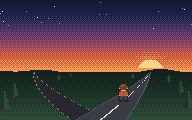
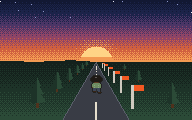
The groove isn't permanent. Stop the water and the grass grows back. That's the road in rerute: a new channel that gets deeper every day you use it instead.
The volume knob
Flood a receptor often enough and it protects itself by pulling back. That's tolerance. Ordinary good things, a meal, a song, a walk with a friend, start to feel flat. The same clips stop working, so you go looking for newer, stronger, stranger ones. That isn't your real taste changing. It's the volume knob turning down, and it turns back up when the flood stops.
The itch
When the flood ends there's a dip: a faint, empty, restless feeling, so mild you'd barely call it anything. We call it the little monster. Left unfed, it grows into edginess, boredom or a low mood. A session ends that feeling for a moment.
It doesn't add calm. It takes away a restlessness it made.
That's why porn seems to help you relax, sleep or focus. It works backwards: you feel the itch when you're not using and the relief when you are, so the session gets the credit for fixing a feeling it caused. Someone who never started doesn't have the itch, and doesn't feel deprived without it.
The pitch
On top of the itch sits a set of beliefs: it helps me sleep, it takes the edge off, it's harmless, everyone does it, I'd be missing out. But nothing can calm you and sharpen you, fill empty time and help you concentrate all at once. Something that claims to do all of them does none of them. Treat the pitch like a pushy salesman: hear him out, nod, believe nothing.
Why this is good news
First, porn gives you nothing you didn't have before you started. It takes something away and hands it back. Second, the chemical part is mild. In a randomized trial, regular users who stopped for a week reported no more craving or withdrawal than those who didn't. Starved, the itch fades, usually within weeks. What's left is the beliefs and the cues, and both can be taken apart. How to quit porn.
Questions people ask
Does porn release dopamine?
Yes, like other rewards. What sets porn apart is the amount of novelty available on demand, which keeps the wanting system engaged far longer than most natural rewards do.
Why do I need more extreme porn?
That's tolerance. A reward system flooded often enough turns its own volume down, so the same content stops working and novelty or intensity has to rise. It reverses when the flood stops.
Is porn a supernormal stimulus?
Many researchers describe it that way: an exaggerated version of natural sexual cues that the brain responds to more strongly than to the real thing.
sources
- Voon, V., Mole, T. B., Banca, P., et al. (2014). Neural correlates of sexual cue reactivity in individuals with and without compulsive sexual behaviours. PLoS ONE, 9(7), e102419. doi.org/10.1371/journal.pone.0102419
- Kühn, S., & Gallinat, J. (2014). Brain structure and functional connectivity associated with pornography consumption: the brain on porn. JAMA Psychiatry, 71(7), 827–834. doi.org/10.1001/jamapsychiatry.2014.93
- Fernandez, D. P., Kuss, D. J., Justice, L. V., Fernandez, E. F., & Griffiths, M. D. (2023). Effects of a 7-day pornography abstinence period on withdrawal-related symptoms in regular pornography users: a randomized controlled study. Archives of Sexual Behavior, 52, 1819–1840. doi.org/10.1007/s10508-022-02519-w
Written and reviewed by the rerute team. rerute is a self-help tool, not medical advice or treatment. If your porn use is tangled up with depression, trauma or thoughts of harming yourself, talk to a professional. If you're in danger, contact your local emergency number.