
Relapsed? What to do in the next 72 hours
The hours after a lapse decide whether it stays one. A calm, practical plan for them, with no shame and no starting over.
By the rerute team5 min readUpdated

the short answer
Don't punish yourself and don't wait to start over on Monday. In the first hour, close it, leave the room and put the phone somewhere else. Within a day, write down the hour, the place, the mood and the first small step that led there, and turn it into one if-then rule. For the next 72 hours, while the pull is strongest, keep your plan in front of you. One lapse doesn't undo your progress. The thought "I've blown it" is what turns one into ten.
A lapse isn't a relapse
Relapse researchers separate the two. A lapse is a single slip. A relapse is a return to the old pattern. The space between them is mostly made of what you tell yourself afterwards.
When someone holding a strict rule slips, two things tend to happen: guilt, and the conclusion that they've already failed, so it no longer matters. Psychologists call this the abstinence violation effect, and it's one of the best-described routes from one slip to a binge. The lapse itself costs you a little. The story about it can cost you weeks.
The first hour
- Close it and leave the room. Shower, walk around the block, drink a glass of cold water. Change your physical state before you think about anything.
- Put the phone somewhere else. The hour after a session is a common time for a second one.
- Skip the "might as well" maths. The day isn't ruined. One lapse is far cheaper than two.
- Don't make a big vow tonight. "Never again, starting Monday" turns the days until Monday into a free pass. The decision you already made still stands. Nothing needs to be decided again.
The first day: log it like a scientist
Write it down calmly and completely while it's fresh: how far it went (a peek, a few minutes, a long session, whether it ended in orgasm), what time it was, where you were and what you were feeling just before.
Then find the first small step. It's rarely "I decided to watch porn". It's opening a browser in bed, "just checking" a feed, staying up after everyone else went to sleep, or a bad call with your boss at 6pm. That first step is the most useful information you'll get about the old road, because it's where the next rule goes.
Turn it into one if-then rule: "If I'm still on my phone after 11, then it goes on the charger in the kitchen." One rule, specific enough to follow without thinking. How to write rules that hold.
Why the next 72 hours matter
For a few days after a lapse, the old road pulls harder. The little monster just got a meal, the cue that led there is fresh, and part of you is running the "already failed" story. That's why lapses so often arrive in pairs.
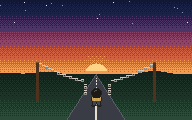
In rerute, two lapses within three days, or three within a week, switch your route to hold on. The ground warms, the road trembles, and the app puts the next 72 hours and your own plan in front of you. In those days:
- Start the wave timer at the first flicker of an urge, not when it's peaking.
- Tighten your blocking. In rerute, tightening the rope is instant and loosening it takes a 500 meter walk.
- Stay away from your riskiest hour and place. If it's late nights in bed, the phone sleeps in another room for three nights.
- Sleep. Tired evenings are when the pitch sounds most convincing.
- If you have a person you trust, tell them. You don't need to share details. "Rough few days, I could use a walk" is enough.
What not to do
- Don't reset to zero. Your progress didn't disappear overnight, and a counter that says it did is wrong. Why streak counters backfire.
- Don't punish yourself. No extra rules you won't keep, no making up for it, no week of self-loathing.
- Don't test yourself later to prove it was a one-off. There's no such thing as one look.
- Don't delete the evidence. Skipping the log feels better for an hour and leaves you nothing to learn from.
How much progress did you lose?
Less than it feels like. The pathways you built by not following cues are still there. On a rerute route, a lapse bends the road back toward the old one by a few days: more for a long session, more if it lands close to another one. Ground you've already walked comes back twice as fast, so after a single lapse most people are back where they were within two to eight days. The milestones you passed stay passed.
Shame doesn't help with any of this. In one study of people recovering from alcohol problems, those who showed more shame while describing their last drink were more likely to relapse in the months that followed. Why shame makes you relapse.
When lapses keep coming
If lapses keep happening despite a plan, look at three things. Is the decision whole, or does part of you still believe porn does something for you? Are your rules aimed at the first small step, or at the moment you're already watching? And is something else driving it, like depression, anxiety, loneliness or trauma? If it's the last one, a therapist who knows this area is worth more than any app.
Questions people ask
Does one relapse reset my progress?
No. The changes you built over clean days don't vanish after one session. A lapse costs a few days, more for a longer one, and ground you've already covered comes back quickly.
Should I tell my partner I relapsed?
That depends on what you've agreed together. If honesty about lapses is part of your agreement, tell them calmly and early, along with what you've learned and what you're changing. Talking to a partner.
Why do I relapse after a long streak?
Often it's the test: weeks in, the pull has faded and a thought says one look would prove you're over it. The pressure of protecting a big number also makes the slip feel like a catastrophe, which makes the binge after it more likely.
What's the difference between a lapse and a relapse?
A lapse is a single slip. A relapse is a return to the old pattern. How you respond to the lapse usually decides whether it becomes a relapse.
sources
- Marlatt, G. A., & Gordon, J. R. (Eds.) (1985). Relapse Prevention: Maintenance Strategies in the Treatment of Addictive Behaviors. Guilford Press.
- Larimer, M. E., Palmer, R. S., & Marlatt, G. A. (1999). Relapse prevention: an overview of Marlatt's cognitive-behavioral model. Alcohol Research & Health, 23(2), 151–160. pubmed.ncbi.nlm.nih.gov/10890810
- Randles, D., & Tracy, J. L. (2013). Nonverbal displays of shame predict relapse and declining health in recovering alcoholics. Clinical Psychological Science, 1(2), 149–155. doi.org/10.1177/2167702612470645
Written and reviewed by the rerute team. rerute is a self-help tool, not medical advice or treatment. If your porn use is tangled up with depression, trauma or thoughts of harming yourself, talk to a professional. If you're in danger, contact your local emergency number.